Work / Report
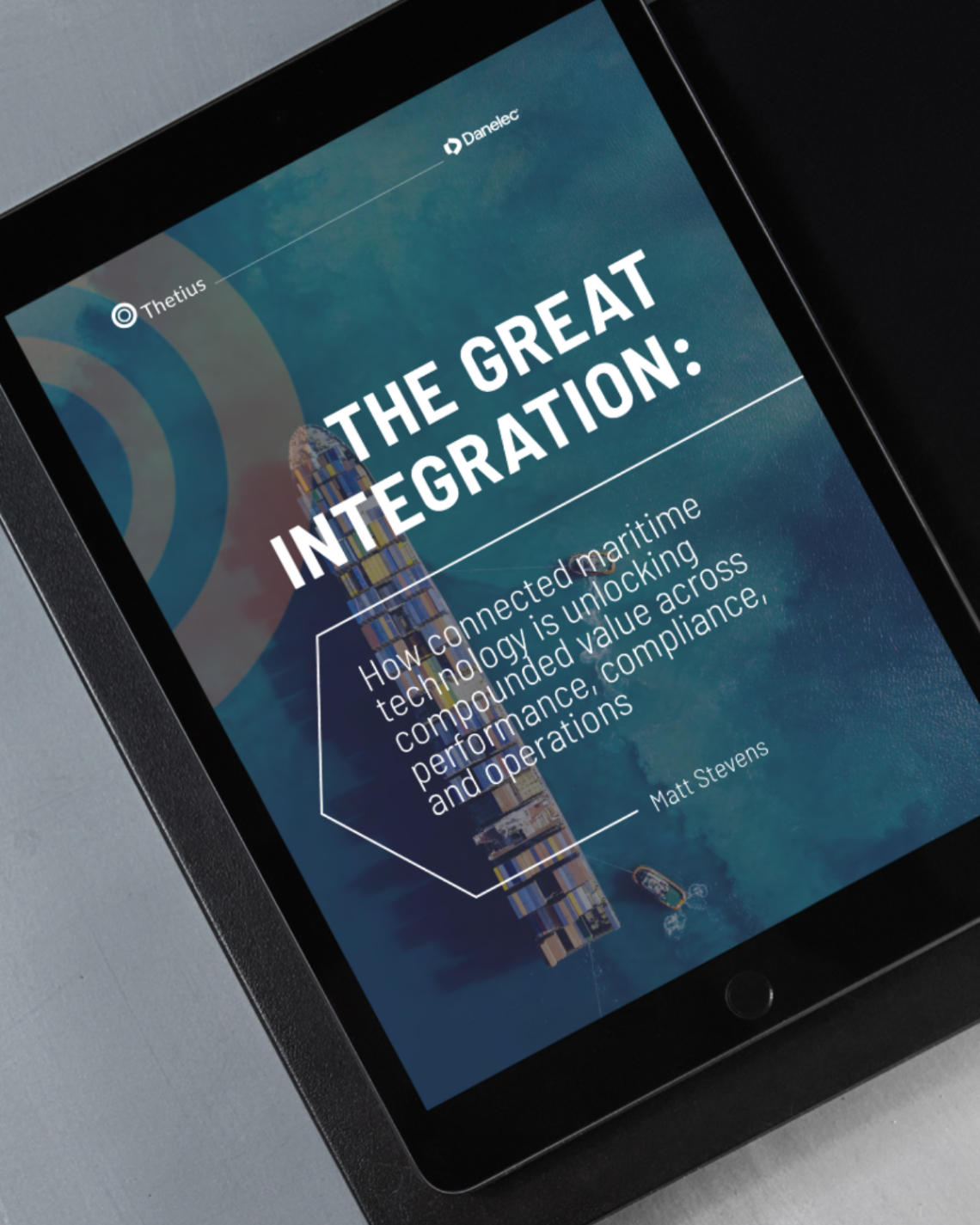
A commissioned Thetius report on why fragmented maritime systems are holding decision quality back, and how connected data closes the gap. Built as evidence, not a sales sheet.
By the time Danelec was preparing its market position for a broader exit narrative, the company had every technical right to claim data leadership: a fleet-wide install base, decades of vessel data, and a growing analytics layer sitting on top of the hardware. What it needed was a way to make that claim that a buyer, not just a customer, would find credible. A vendor asserting its own leadership is marketing. A vendor commissioning independent research that happens to prove the same point is evidence.
The integration thesis
Performance
Decision quality on fuel, speed, and efficiency depends on connected, trusted data, not another isolated dashboard.
Compliance
Regulatory pressure is compounding. Systems that cannot share a single version of the truth cannot defend it under audit.
Operations
Fragmented workflows cost time twice: once collecting data, once reconciling it before anyone can act.
That is what “The Great Integration” was built to do. Commissioned from Thetius, the report starts from an uncomfortable industry truth: shipping companies have invested heavily in digital tools, yet decision quality has not kept pace with digital adoption. Fragmented systems and disconnected workflows mean performance, compliance, and commercial teams are often working from different versions of the truth, and the report lays out what “decision-ready” systems look like, and how fleets can connect what they already have rather than ripping it out.
The argument does double duty. Read as an industry piece, it is a genuinely useful diagnostic for any technical manager weighing a systems investment. Read against Danelec's own positioning, it is a precise description of the problem Danelec's platform exists to solve, published by an independent research house rather than Danelec's own marketing team.
That distinction mattered to the equity story. A buyer diligencing Danelec was not just being told the company understood the market. They were shown a piece of third-party research, cited and shared industry-wide, that made Danelec's own thesis the industry's thesis. It reframed a hardware and analytics vendor as the company setting the terms of the conversation about data quality and integration in the category it competes in.